Request call
20.01.2026
TURNING POINT
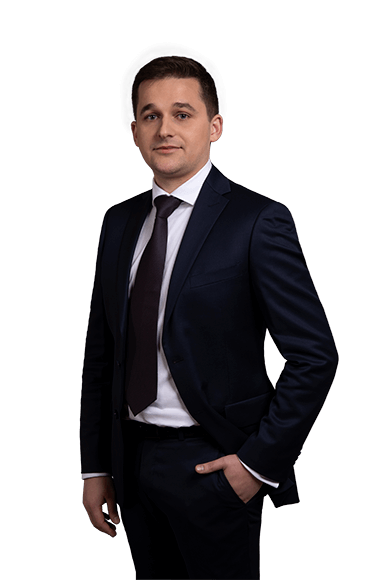
Author: Yurii Khapko, Managing Partner, TOTUM Law Firm, Attorney-at-Law, PhD in Law(Source https://pravo.ua/articles/povorotnyi-moment/)
— How would you assess the current state of the construction sector, and what role do you see it playing in the country’s recovery?
The scale of destruction inflicted by Russia on critical infrastructure, logistics facilities, and civilian assets is enormous. The total financial need for reconstruction has already reached USD 530 billion, according to the Rapid Damage and Needs Assessment. Unfortunately, by the end of the war this figure will be even higher.
While efforts to restore critical and social infrastructure are being undertaken “here and now” — in parallel with new damage — large-scale reconstruction and the construction of new housing, especially in frontline and formerly occupied territories, will obviously begin only after active hostilities cease and will last for at least a decade.
Today, due to wartime risks, limited financial resources, complex logistics, and a shortage of qualified personnel, the construction sector is going through difficult times. However, the entire Ukrainian business community — developers included — is constantly searching for new paths of development. Over the past three years, everyone has realized that life must continue under changed circumstances, requiring rapid adaptation, new solutions, and forward movement despite all challenges.
Compared to the beginning of the full-scale invasion, the real estate market is showing a slow but tangible recovery. The main demand is for turnkey housing, along with growing interest in suburban real estate, especially in safer regions.
Who is shaping this demand? Primarily internally displaced persons and families of fallen servicemen who have received compensation, as well as individuals seeking to legalize capital through the purchase of real estate for subsequent resale or leasing. As for commercial real estate, demand comes from relocated businesses and strategic investors who anticipate post-war price growth or use such investments to diversify their risks.
Although no one can say with certainty when the war will end, preparations for recovery must begin now in order not to lose valuable time.
What is needed is a strategic roadmap clearly outlining the mechanisms for developing economically critical sectors and identifying sources of financing. The construction industry should become one of the top five drivers of Ukraine’s economic growth.
— In your opinion, what could the country’s reconstruction plan look like, and what conditions are necessary for its implementation?
I would highlight three key trends that will undoubtedly shape post-war construction.
The first is infrastructure modernization through the use of modern, energy-efficient, and innovative technologies. This could be particularly attractive to foreign investors interested in exchanging experience and sharing best practices. Ensuring security conditions will also be a critical factor for new developments.
The second trend is that the construction sector will stimulate the development of numerous related industries, such as building materials manufacturing, metallurgy, transport, and logistics, thereby creating a favorable environment for integrated investments.
The third is the construction sector’s ability to positively influence the labor market by offering competitive wages during a construction boom, thus creating conditions for the return of the majority of Ukrainians to their homeland.
Naturally, an increase in construction activity will depend primarily on the availability of stable financing. In this context, relying solely on foreign investors would be a mistake — robust state-backed credit programs are essential. Today, the “eOselya” program is a decent tool, but insufficient in scale. As of mid-November 2025, only 20,000 loans totaling UAH 33.5 billion have been issued under the program. This is merely a drop in the ocean. If, after the war, Ukraine’s banking system is not prepared to roll out a full-fledged mortgage lending program on reasonable terms for the population, recovery will be extremely difficult. I believe the National Bank of Ukraine should already be working on this task.
There must also be effective oversight of reconstruction processes and clear prioritization in selecting projects financed with public funds. In my view, preferential treatment should be granted first and foremost to de-occupied and frontline communities that have suffered the most.
As for attracting external investment and international assistance, the key issue is establishing clear, transparent, and stable rules of the game for the future. This undoubtedly includes the implementation of European standards and the continuation of reforms — anti-corruption, judicial, and privatization reforms in particular. Without the trust of the international business community and amid persistent corruption scandals, Ukraine will not achieve true investment attractiveness.
— Which improvements to construction market mechanisms could accelerate the reconstruction process?
I would name several.
An important factor will be the implementation of European standards in the field of construction materials and the updating of national building codes (DBNs).
Equally important is the digitalization of all permitting procedures — including electronic declarations, notifications, and urban planning passports — through the Unified State Electronic System in the Construction Sector.
To enhance competitiveness and ensure transparent, intelligent planning, BIM modeling should be introduced for all projects financed with public funds.
One of the most corruption-prone instruments remains urban planning conditions and restrictions, which should be transformed from quasi-permit documents into a simple public cadastral extract accessible to any interested party.
Another serious problem is the lack of up-to-date urban planning documentation, as only seven communities in Ukraine have approved spatial development plans.
Without reforming real estate valuation legislation to align it with international standards, and without simplifying procedures for transferring land ownership rights from state to private ownership, international businesses will have no grounds for entering the Ukrainian market on a large scale.
A critically important factor is, and will remain, the training of qualified personnel for the construction sector. The focus should be on strengthening and popularizing vocational education, dual education models, and modernizing educational infrastructure.
In conclusion, the Ukrainian real estate market stands on the threshold of a fundamental transformation, where success will depend on the ability to establish sustainable rules, ensure transparency of financing, and move from perceiving projects merely as square meters to viewing them as safe, affordable, and resilient living spaces.
A positive outcome will depend on how balanced the cooperation is between the state, local communities, and the private sector — with people at the center as the key resource around whom and for whom everything will take place. The main challenge for the coming decade is the return of our people.

Читать еще

Legal assistance in a short time